
Zone 2 Cardio And Functional Strength: Why 2026’s Biggest Fitness Trend Is About Slowing Down
Low-intensity Zone 2 cardio, heavy compound lifting, ruck walking and mobility work have replaced high-intensity burnout culture in 2026, as more people train for long-term joint and metabolic health rather than short-term exhaustion.

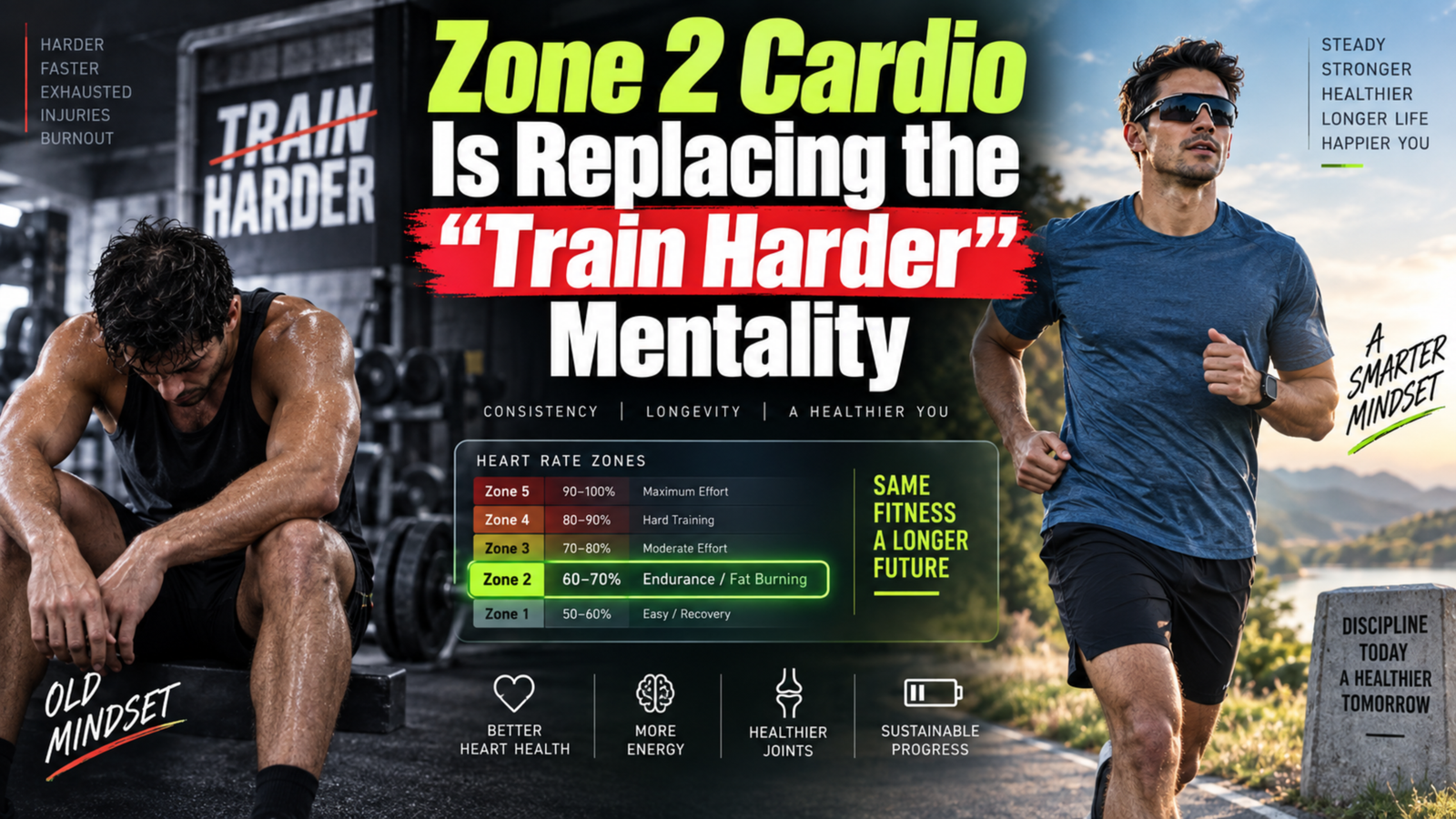
For years, fitness culture ran on a single message: go harder. Sprint intervals, punishing HIIT circuits, and workouts designed to leave you flat on the floor were the badge of honour. In 2026, that culture is quietly being dismantled. Low-intensity steady-state endurance training, known as Zone 2 cardio, paired with heavy compound lifting, ruck walking, and dedicated mobility work, has emerged as the dominant approach among people training for the long haul, not just this summer.
What Exactly Is Zone 2 Cardio?
Zone 2 refers to a heart rate range of roughly 60 to 70 percent of your maximum heart rate — a pace most people can sustain while still holding a conversation. It’s typically estimated by subtracting your age from 220 to get a rough maximum heart rate, then calculating 60 to 70 percent of that number, though wearable-based methods using resting heart rate are increasingly common and more precise.
At this intensity, the body relies primarily on fat as fuel rather than burning through carbohydrate stores the way high-intensity efforts do. Sustained Zone 2 work is also linked to improved mitochondrial density — essentially giving your cells more efficient machinery for turning oxygen and fat into energy. Research cited by fitness researchers this year suggests that 150 to 180 minutes of Zone 2 training a week can improve cardiovascular efficiency by 15 to 20 percent, with a fraction of the joint stress and recovery cost of repeated high-intensity sessions.
The Retreat From Burnout Culture
The shift isn’t just anecdotal. Industry data shows participation in high-impact aerobic formats has fallen by roughly a third over the past five years, a decline attributed to growing awareness of joint health and an ageing base of regular gym-goers. Fitness influencers who once championed daily sprint sessions are now openly describing steady, moderate-effort training as “a lot more enjoyable than killing yourself with sprints every day.”
That doesn’t mean intensity has disappeared altogether. Many coaches now favour a polarised model, built around roughly 80 percent low-intensity aerobic work and 20 percent genuinely hard effort, while deliberately avoiding the so-called “grey zone” — workouts too hard to allow real recovery but too easy to drive meaningful adaptation. The goal isn’t to eliminate hard training, but to stop treating exhaustion as the only marker of a workout well done.
Heavy Lifting Makes A Comeback — With A Purpose
Alongside Zone 2 cardio, functional strength training has become close to non-negotiable in serious training plans this year. Rather than isolation exercises on machines, the focus has shifted to multi-joint, compound movements that mirror real-life demands: squats, hinges, carries, pushes, pulls, and rotations. Coaches particularly point to the Romanian deadlift and the kettlebell swing as two of the most valuable movements in this category — and two that most beginners still skip.
The logic is straightforward: heavy compound lifting builds the muscle-tendon stiffness and strength reserve that protect joints during everyday movement, not just during workouts. For adults over 35 in particular, training is increasingly being aimed at preserving muscle mass and VO2 max as long-term health metrics, rather than chasing short-term aesthetic changes.
Rucking And Mobility Round Out The Picture
Ruck walking — walking briskly with a weighted vest or loaded backpack — has grown from a niche military-inspired habit into one of the most talked-about entries in this new training stack. It layers a light strength and cardio stimulus onto an activity as simple as walking, delivering much of the benefit of Zone 2 cardio while adding a load-bearing component that supports bone density and posture, all with minimal impact on the joints.
Mobility work, once treated as an optional warm-up afterthought, has similarly been folded into regular training as a safeguard against the very injuries that burnout-style workouts used to cause. Together, these pieces form a training philosophy less concerned with how sore you feel afterward, and more concerned with whether you’re still training, unhurt, a year from now.
The common thread across all of it is patience. Zone 2 cardio, compound lifting, rucking and mobility work don’t promise the dramatic, immediate burn of a brutal HIIT class. What they offer instead is a training style built to be sustained for years rather than weeks — which, for a growing number of people, has become the entire point.