
Tata Sons IPO: Why India’s Biggest Business Group May Be Forced to Go Public
Tata Sons is facing renewed pressure to consider a public listing after the RBI reportedly rejected its request for an exemption from a regulatory requirement.

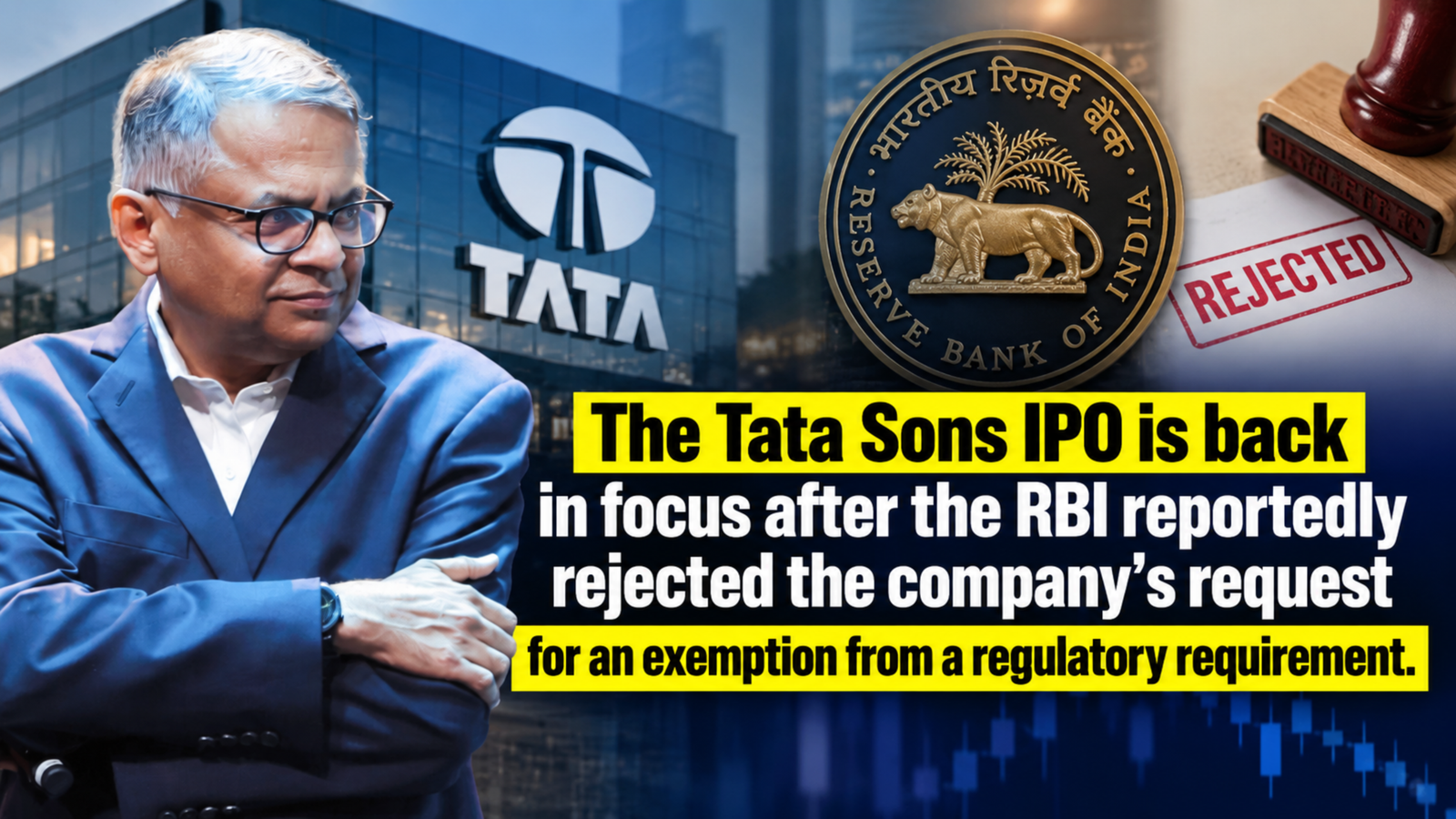
The long-running debate over a potential Tata Sons IPO has taken a major turn after the Reserve Bank of India reportedly rejected the company’s request for an exemption from a regulatory requirement that could push it toward a public listing.
The development has put one of India’s most closely watched corporate decisions back in the spotlight. Tata Sons is the holding company at the centre of the Tata Group, whose businesses span automobiles, technology, consumer products, airlines, hotels and several other major sectors.
Why the Tata Sons IPO Matters
A public listing of Tata Sons would be significant because investors would gain a direct opportunity to participate in the holding company that sits above several major Tata businesses.
The issue is linked to regulatory rules for core investment companies (CICs). Tata Sons had sought an exemption, but the reported rejection means the company faces increased pressure to comply with the framework, including the possibility of going public.
For the Tata Group, this is not simply another IPO story. A listing could potentially change how investors value the group’s central holding company and provide a new window into the financial structure of one of India’s most influential business houses.
A Major Decision for the Tata Group
The timing also makes the issue particularly important. Tata Sons has interests across some of India’s best-known companies and brands, giving any decision involving its ownership structure the potential to attract enormous investor attention.
An IPO could also create a fresh avenue for market participants to assess the value of Tata Sons independently rather than relying mainly on the performance and valuations of its listed group companies.
However, taking a large holding company public would involve substantial regulatory, financial and strategic considerations.
What Happens Next?
The immediate focus will be on how Tata Sons responds to the RBI’s reported decision and what regulatory steps follow.
If a public listing becomes unavoidable, the process could become one of India’s most closely watched corporate-market stories. The size, valuation and structure of any eventual offering would likely generate significant interest among institutional investors and retail participants.
For now, the Tata Sons IPO remains a developing story, but the latest regulatory setback has made the possibility of a market listing considerably more important.