Uniform Civil Code: Amit Shah Sets 2029 Target for All 21 NDA States
Amit Shah has said the Uniform Civil Code will be implemented in all 21 BJP-led NDA-governed states before 2029, signalling a renewed push for a common civil framework across India.

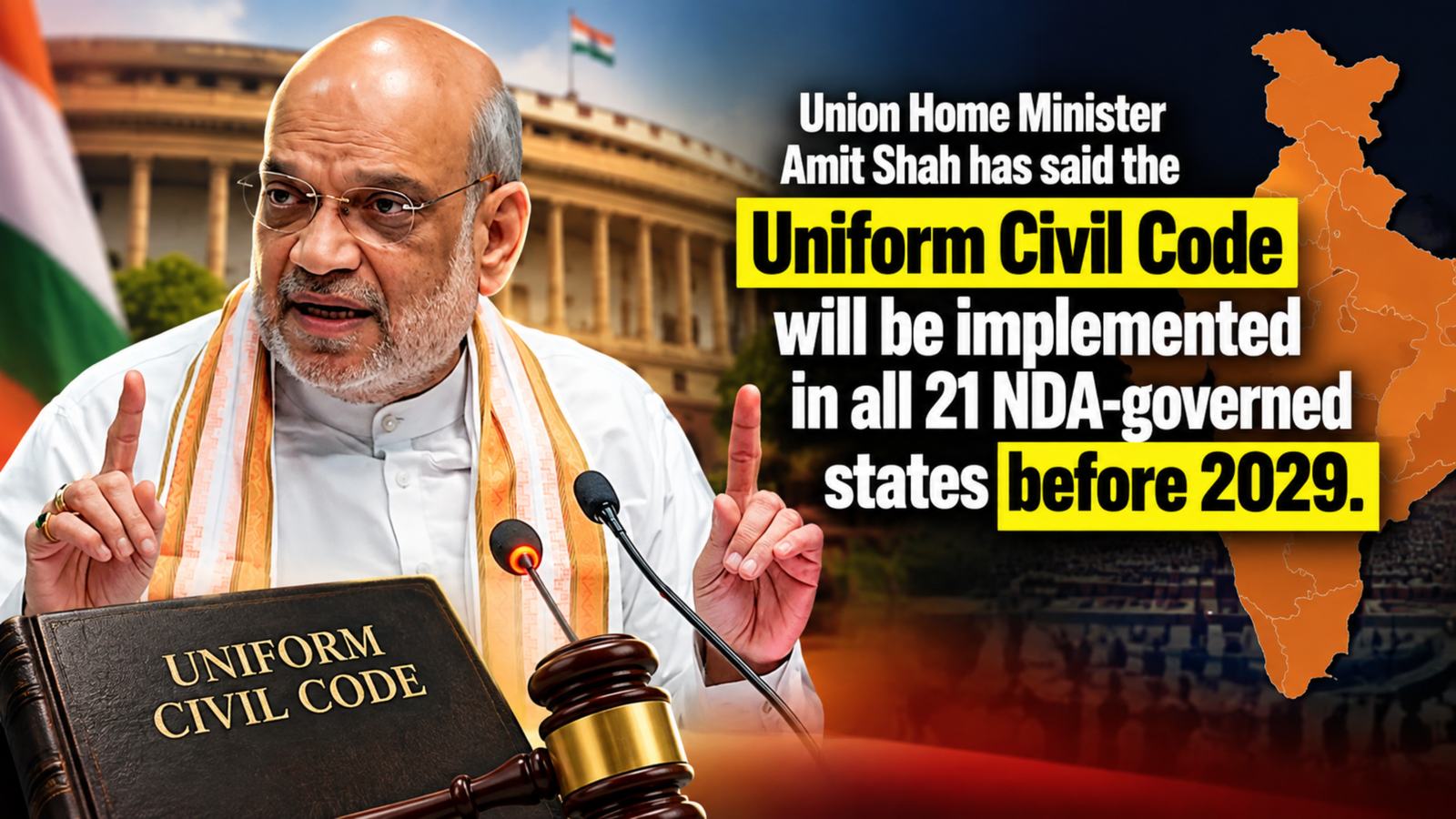
Union Home Minister Amit Shah has set a clear political target for the implementation of the Uniform Civil Code (UCC), saying it will be introduced in all 21 states governed by the BJP-led NDA before 2029.
Speaking at a press conference in Mumbai on Sunday, Shah said the UCC has already been implemented in several states and expressed confidence that the remaining NDA-ruled states will also adopt the common civil framework before the 2029 deadline.
“We introduced the Uniform Civil Code (UCC) in several states. I am confident that we will implement the UCC in all 21 states governed by the BJP-led NDA before 2029,” Shah said.
The statement puts the UCC firmly back in the spotlight as one of the NDA’s major political and legal priorities ahead of the next general election.
What Is the Uniform Civil Code?
The Uniform Civil Code seeks to establish a common set of personal laws for citizens, regardless of their religion. These laws would cover areas such as marriage, divorce, inheritance and adoption.
Currently, personal laws in several of these areas can differ between religious communities. Supporters of the UCC argue that a common legal framework could promote equality and consistency in civil matters.
The proposal, however, has remained highly debated in India. Critics have raised concerns about religious freedom, cultural traditions and the possible impact of a uniform framework on minority communities.
UCC Already Implemented in Some States
Shah pointed out that the UCC has already been introduced in several states, with the NDA government continuing to push for wider adoption.
His latest announcement indicates that the Centre and NDA-ruled states intend to make the issue a significant part of their policy agenda over the coming years.
The proposed 2029 deadline would require the remaining NDA-governed states to undertake their own legislative and administrative processes to introduce the code.
A Major Political and Legal Debate
The UCC has been one of the most prominent issues in India’s political discourse for years. Supporters see it as a step towards equal treatment under civil law, while opponents argue that personal laws are closely connected to religious and cultural practices that need to be protected.
Shah’s latest remarks signal that the NDA intends to continue pursuing the issue and aim for implementation across all 21 NDA-governed states before 2029.
Whether the remaining states adopt the proposed framework within that timeframe is likely to depend on individual state legislation, political consensus and the wider legal process.