Bihar Family Holds Symbolic Funeral for 18-Year-Old Daughter After Inter-Caste Marriage

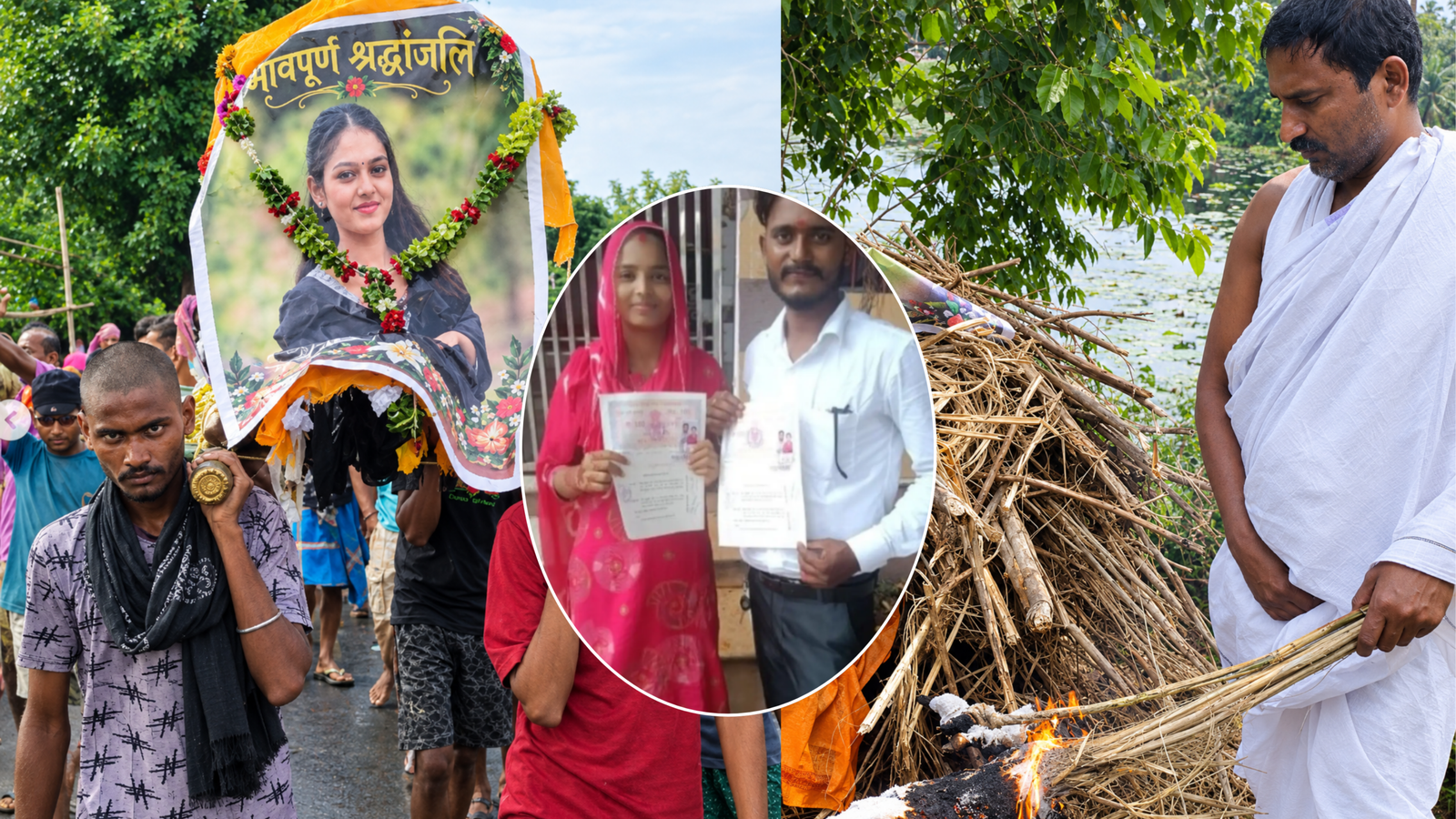
Purnia, Bihar: A family in Purnia district has allegedly performed symbolic last rites for their 18-year-old daughter after she married a young man from another caste. The incident has triggered widespread discussion about caste, family control, and the right of adults to choose their life partners.
What Happened
According to reports, the young woman left home with her boyfriend and later married him through a court marriage. She then appeared before a local court and stated clearly that she had married the man of her own choice, of her own free will.
Her family’s reaction was reportedly extreme. Family members allegedly prepared an effigy bearing her photograph and carried it through the locality in a funeral-style procession. They then reportedly performed symbolic last rites, as if their living daughter had died.
The unusual procession quickly drew attention from local residents, and the incident has since become a subject of public debate.
The Woman’s Statement Is Central to the Case
The most important fact in this incident is the woman’s own statement. By telling the court that she married of her own choice, she made it clear that the decision was voluntary and not the result of force or abduction.
At 18, she is a legal adult. Under Indian law, 18 is the minimum legal age of marriage for women, and an adult woman has the right to decide whom she marries.
What the Law Says
Indian courts have repeatedly upheld the right of adults to marry a partner of their choice, regardless of caste or religion.
- Right to life and personal liberty: The Supreme Court has held that the right to choose a life partner is part of the fundamental right to life and personal liberty under Article 21 of the Constitution.
- Protection for inter-caste couples: In the Lata Singh v. State of Uttar Pradesh (2006) case, the Supreme Court said that once an adult marries, family members cannot harass, threaten or commit violence against the couple, and directed authorities to protect such couples.
- Against “honour”-based pressure: In Shakti Vahini v. Union of India (2018), the court said that when two adults consent to marry, the consent of family, clan or community is not required, and issued guidelines to prevent threats and violence against such couples.
- Special Marriage Act, 1954: This law allows couples of different castes or religions to register their marriage legally.
A symbolic funeral is not in itself a physical attack, but social boycotts, public humiliation and intimidation can place serious emotional pressure on young couples.
Why Such Incidents Still Happen
Despite legal protection, inter-caste marriages still face strong resistance in many parts of India. Families often link a marriage to social standing, community reputation and tradition. When a child makes an independent choice, some families see it as a loss of honour.
Performing symbolic last rites is a way of publicly declaring that the family has cut all ties with the daughter. For the young woman, such a message can be deeply painful, even if she is safe and legally married.
The Bigger Question
This incident raises an important question for society: can families accept the decisions of their adult children, even when those decisions go against tradition?
Social reformers and legal experts have long argued that inter-caste marriages help reduce caste divisions. Yet couples who take this step often face isolation, pressure and, in some cases, threats to their safety.
Parents may have concerns about their children’s future, and those concerns can be discussed openly. But experts say dialogue, not public humiliation or intimidation, is the right way to handle family disagreements.
Help Is Available
Couples facing threats or pressure over their marriage can approach the local police or the court for protection. Women in distress can call the Women Helpline 181 or the emergency number 112.
Conclusion
The Purnia incident is a reminder that while the law firmly protects the right of adults to marry by choice, social acceptance has not fully caught up. The young woman’s clear statement in court reflects a legal right the Constitution guarantees to every adult. The real challenge is building a society where such choices are met with understanding, not symbolic funerals.
(This report is based on available media reports. NXT Media will update the story if more details emerge.)