The AI Capital Squeeze: Why Oracle Is Slashing Thousands of Jobs While Spending Billions on Infrastructure
While investing tens of billions into AI data centers and cloud capacity, Oracle is simultaneously cutting thousands of veteran roles—highlighting the tech industry’s brutal shift from labor-intensive delivery to automated, capital-intensive infrastructure.

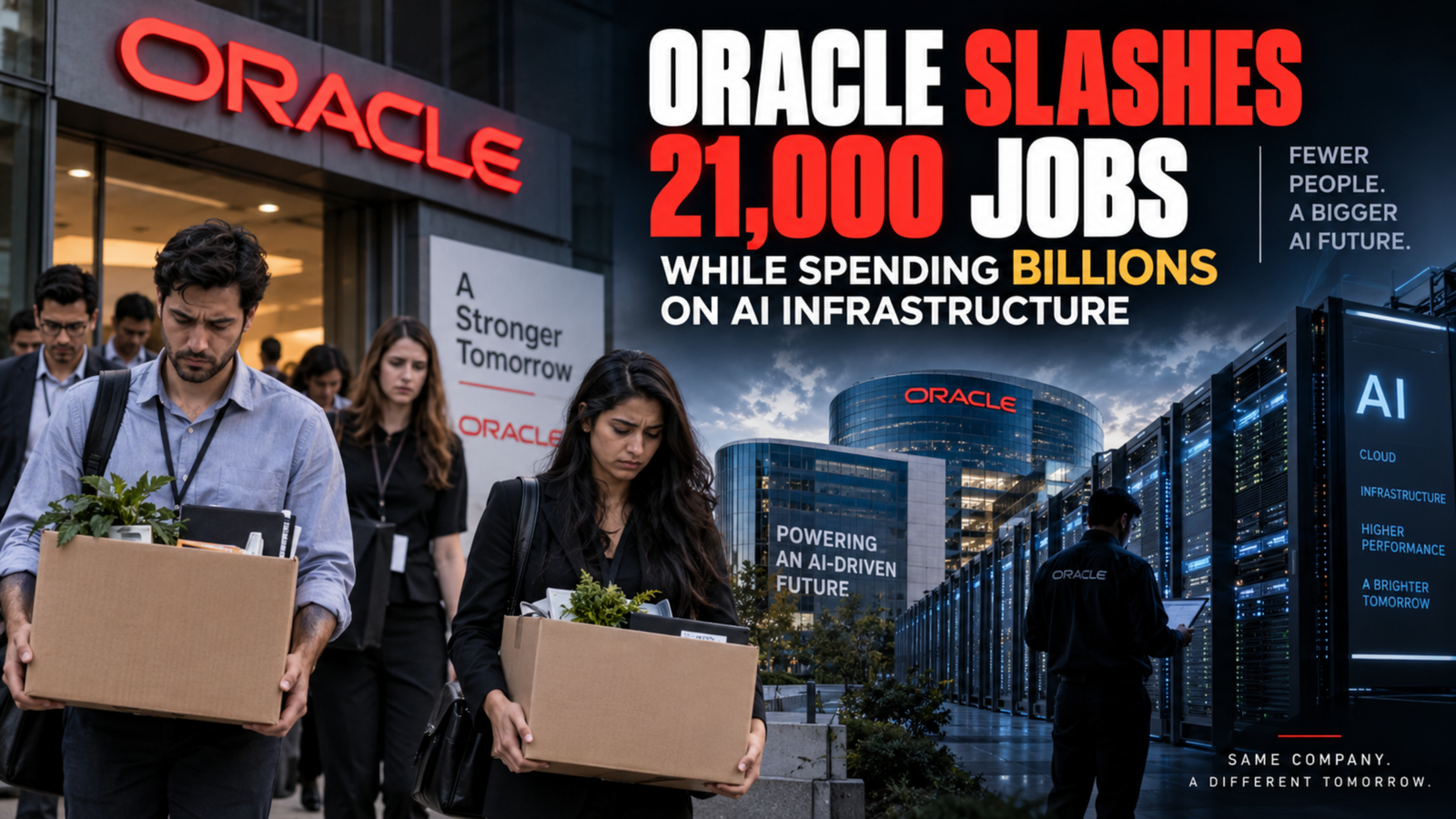
For thousands of enterprise technology professionals, decades of loyalty and specialized system expertise are hitting an unprecedented industry wall.
Oracle has accelerated a sweeping corporate transformation, pivoting its capital allocation toward hyperscale cloud infrastructure and artificial intelligence workloads. The scale of this transition is reflected in internal staffing figures: the enterprise giant’s global workforce shrank by approximately 21,000 employees—roughly 13%—during fiscal 2026, falling from 162,000 to approximately 141,000.
The contraction continues into the second half of the year. Fresh termination rounds initiated across global units in September have hit multi-year veterans without advance disclosure of final casualty numbers.
This creates a glaring corporate paradox: how does a technology firm justify thousands of severances while deploying record-breaking capital reserves?
The Balance Sheet Pivot: From People to Compute
The company’s balance sheet provides a straightforward, if unforgiving, answer. Oracle is spending aggressively to construct data centers and secure compute capacity required by generative AI developers.
- Surging Capital Expenditure: Oracle’s quarterly CapEx surged to $28.5 billion, up from $8.5 billion in the prior year, with net annual capital commitments projected to reach $70 billion.
- Restructuring Provisions: The firm increased its projected restructuring liabilities by roughly $700 million, bringing total expected restructuring costs to $2.8 billion for severance packages and facility realignments.
In purely financial terms, hyperscale cloud competition requires enormous cash reserves. By cutting operational expenses tied to routine delivery, maintenance, and administrative payroll, Oracle is rechanneling free cash flow into high-demand physical assets: power generation, custom silicon, server racks, and AI network clusters.
The Human Toll of Strategy Shifts
Beyond operational efficiency metrics lies a disruptive human cost. Many affected professionals spent 5, 10, or 15 years within the enterprise ecosystem, structuring their mortgages, families, and skill profiles around what was historically considered one of tech’s most stable employers.
Instead, many employees reported sudden system deactivations and remote severance notifications. Decades of institutional knowledge have offered limited insulation against a strategic shift prioritizing automated workflows over manual engineering execution.
Routine Roles Under Pressure
The shift seen at Oracle mirrors pressures across the global enterprise services ecosystem. Routine execution, quality assurance, manual database administration, and repetitive application support are bearing the brunt of enterprise automation.
Conversely, enterprise demand has migrated sharply toward:
- Machine learning operations (MLOps)
- AI infrastructure engineering
- Scaled cybersecurity architectures
- Distributed systems optimization
While the broader tech ecosystem still offers opportunities—particularly within Global Capability Centers (GCCs), agile software firms, and specialized cloud startups—the transition window for displaced legacy workers remains narrow and demanding.
The Unresolved Question of the AI Era
Oracle’s restructuring illustrates a wider reality of the enterprise software market: the AI revolution is not primarily expanding traditional corporate payrolls. Instead, it is shifting corporate spending away from human labor toward computational hardware and automated tooling.
As legacy enterprises restructure to compete with agile cloud natives, the industry faces an enduring economic question: when AI boosts corporate market value while eliminating mid-tier white-collar roles, who ultimately shoulders the transition costs—the corporations, the displaced workforce, or the broader economy?